Spinal cord injury (SCI) remains one of the most devastating neurological conditions, affecting approximately half a million new patients worldwide each year and leaving millions more living with chronic paralysis, sensory loss, and autonomic dysfunction. For most of the twentieth century, complete and chronic SCI was considered irreversible — the severing of motor and sensory connections between the brain and body was understood to be permanent, and clinical management focused exclusively on compensation strategies rather than restoration of lost function.
The LamiStem Technique, pioneered and refined at NuRaX Care and Research Center under the leadership of Prof. Dr. Pritam Majumdar, represents a paradigm-shifting advance in spinal cord injury rehabilitation. Drawing on the convergence of minimally invasive neurosurgical access, targeted epidural electrical stimulation, and structured activity-based rehabilitation, LamiStem activates spinal cord circuits that remain biologically intact below the level of injury — enabling voluntary movement, sensory recovery, and autonomic improvement in patients who had lived with fixed paralysis for years or even decades.
The Science of Spinal Neural Circuits
The conceptual foundation of the LamiStem Technique rests on a fundamental insight from contemporary spinal cord neuroscience: even in clinically complete spinal cord injuries — those in which no voluntary motor or sensory function exists below the injury level — the spinal cord below the lesion is rarely completely destroyed. In the majority of chronic SCI patients, substantial populations of spinal neurons, interneurons, and motor output circuits survive below the injury site in a state of chronic inactivity, starved of the descending drive from supraspinal motor centers that would normally activate them.
Research over the past two decades has demonstrated that these dormant circuits retain significant functional potential. When appropriately stimulated — particularly through epidural electrical stimulation delivered to the posterior lumbar spinal cord — these circuits can be reactivated, enabling them to generate coordinated motor output in response to volitional effort from the patient. Critically, this reactivation is not simply passive electrical muscle contraction; it engages the spinal pattern generators and facilitates the re-establishment of voluntary motor control in response to descending signals from the injured but partially intact corticospinal tract.
The LamiStem Approach: Surgical Access and Electrode Placement
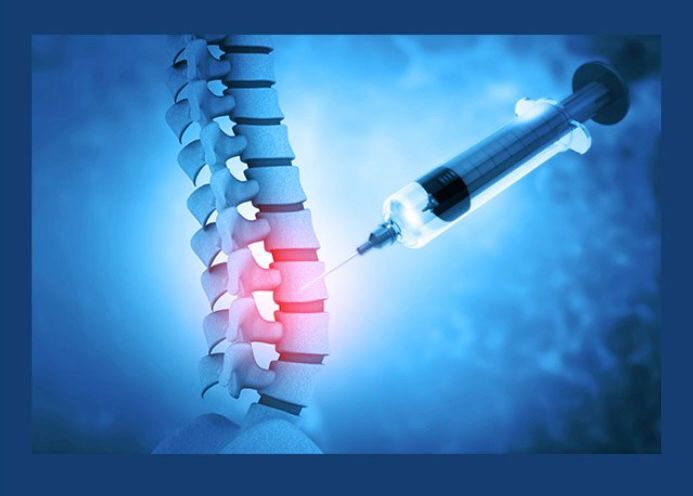
The distinguishing surgical innovation of the LamiStem Technique is its approach to electrode placement. Conventional epidural SCI stimulation systems typically access the epidural space via a percutaneous needle at the lumbar level, limiting electrode coverage to a relatively narrow spinal segment. The LamiStem Technique instead employs a minimally invasive laminotomy — a targeted removal of a small portion of the lamina (the bony arch of a vertebra) — to provide direct, precisely controlled surgical access to the epidural space and allow optimal positioning of multi-electrode arrays across the critical lumbar spinal segments that govern lower extremity motor function.
This approach confers several important advantages. It permits the placement of larger, multi-contact electrode arrays that can cover a broader range of spinal cord circuits simultaneously. It allows the surgical team to visualize and protect the neural structures during implantation. And it enables more precise dorsoventral (front-to-back) positioning of the electrodes relative to the spinal cord surface, optimizing stimulation of the deep dorsal horn interneurons and motor pathway afferents that are most therapeutically relevant.
What Patients Experience: The Path to Recovery
The LamiStem treatment journey unfolds in structured phases designed to maximize neuroplastic benefit. Following implantation, patients enter an intensive rehabilitation program that pairs electrical stimulation with targeted voluntary effort — a combination that has been shown to produce far greater neuroplastic reorganization than stimulation alone.
- Voluntary movement: The majority of LamiStem patients who previously had no voluntary movement below their injury level demonstrate the ability to produce intentional leg movements with stimulation active within weeks of starting the protocol, with many progressing to weight-supported standing and stepping.
- Sensory recovery: Many patients report meaningful improvements in tactile sensation, temperature perception, and proprioception below the injury level, reflecting reactivation of intact sensory pathways.
- Autonomic improvements: LamiStem stimulation frequently produces significant improvements in cardiovascular autonomic regulation (including orthostatic blood pressure control), bladder function, bowel function, sexual function, and thermoregulation — domains that profoundly affect health and quality of life in SCI.
- Strength and endurance: Progressive improvements in lower limb strength and functional endurance are documented through objective motor testing, enabling greater participation in rehabilitation and activities of daily living.
- Neuropathic pain: Many patients report meaningful reductions in SCI-associated neuropathic pain, which is often one of the most severe and treatment-resistant sequelae of spinal cord injury.
LamiStem does not simply manage the consequences of spinal cord injury — it targets the biological substrate of paralysis itself, reactivating the neural circuits that make voluntary movement possible and initiating neuroplastic recovery processes that extend well beyond the period of active stimulation.
Patient Selection: Who Benefits Most?
LamiStem produces the most dramatic results in patients with chronic motor-complete or sensorimotor-complete SCI at the thoracic or cervical level who have been injured for at least one year. Patients with traumatic SCI from motor vehicle accidents, sports injuries, or falls form the largest candidate population, but non-traumatic SCI from tumors, vascular events, or inflammatory conditions is also evaluated on a case-by-case basis.
The NuRaX multidisciplinary team conducts comprehensive pre-implantation evaluation including neuroimaging, electrophysiological mapping of residual spinal function, detailed motor assessment, and psychological evaluation. Not every SCI patient is an ideal LamiStem candidate — the anatomy of the injury, the integrity of spinal circuits below the lesion, and the patient's capacity to engage with intensive rehabilitation all influence candidate selection and expected outcomes.
A New Chapter in Spinal Cord Injury Recovery
The LamiStem Technique represents the synthesis of decades of neuromodulation research, advances in minimally invasive spine surgery, and growing understanding of spinal neuroplasticity. At NuRaX Care and Research Center, we have treated patients from across the world who had been told their paralysis was permanent — and we have witnessed, repeatedly, the extraordinary capacity of the injured spinal cord to recover function when provided with the right biological and electrical conditions.
If you or a family member is living with chronic spinal cord injury and seeking to understand the possibilities for functional recovery, we invite you to contact NuRaX to arrange a comprehensive evaluation with our team. The potential to reclaim movement, sensation, and independence may be greater than you have been led to believe.
N
NuRaX Editorial Team
NuRaX Care & Research Center
Our editorial team comprises neurologists, neurosurgeons, and clinical researchers dedicated to providing accurate, accessible information about neuromodulation therapies and the latest advances in neurological care.