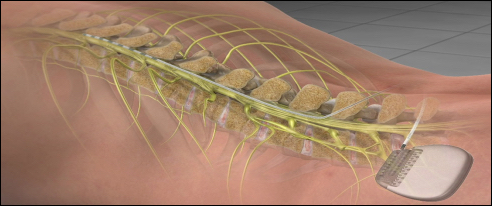
Spinal Cord Stimulation: Advanced Neuromodulation for Chronic Pain
SCS delivers targeted electrical impulses to the dorsal columns of the spinal cord, providing sustained relief for refractory chronic back pain, FBSS, CRPS, and neuropathy.
Expert insights, research breakthroughs, and patient stories from the world of neuromodulation therapies.

Focal neuropathic pain — pain arising from injury, compression, or dysfunction of specific peripheral nerves — is one of the most challenging pain syndromes to manage effectively. Unlike generalized pain conditions, focal neuropathic pain is often highly localized, following the anatomical distribution of a single nerve or nerve branch, and it frequently fails to respond adequately to systemic analgesic medications. Patients with conditions such as occipital neuralgia, post-traumatic peripheral nerve injury, or chronic shoulder and knee pain of neural origin often cycle through multiple treatment modalities without achieving lasting relief.
Peripheral Nerve Stimulation (PNS) represents a powerful and increasingly well-validated therapeutic option for this patient population. By delivering targeted electrical impulses directly to the affected peripheral nerve, PNS modulates pain signaling at the source — bypassing the limitations of systemic drug therapy and achieving focal, precise relief with a minimally invasive approach. At NuRaX Care and Research Center, PNS is a core component of our neuromodulation toolkit for complex regional and peripheral pain conditions.
The fundamental principle underlying PNS parallels that of spinal cord stimulation: electrical stimulation of a sensory nerve activates large-diameter Aβ fibers that inhibit pain signal transmission carried by smaller C and Aδ fibers. In PNS, however, this inhibitory effect is applied at the level of the peripheral nerve itself, upstream of the spinal cord, offering several important therapeutic advantages.
Because stimulation targets the specific nerve responsible for the patient's pain, PNS can achieve precise anatomical coverage that is often impossible with spinal cord-level stimulation. The technique also avoids the anatomical constraints of paraspinal electrode placement and can reach nerves in the head, face, limbs, and trunk that are inaccessible via epidural approaches. Advanced ultra-low-frequency PNS waveforms have demonstrated efficacy in reducing central sensitization — the amplification of pain signals in the brain — in addition to their peripheral effects, broadening the mechanism of benefit beyond simple afferent inhibition.
PNS has demonstrated clinical efficacy across a diverse range of focal pain conditions, with emerging evidence for several new indications:
Modern PNS systems have evolved dramatically from the open surgical procedures of earlier decades. The majority of PNS implantations today are performed percutaneously — without open surgery — using needle-based delivery systems that place flexible, ultra-thin electrode leads adjacent to the target nerve under ultrasound guidance. This minimally invasive approach dramatically reduces procedural risk, eliminates the need for general anesthesia in most cases, and significantly shortens recovery time.
Like spinal cord stimulation, PNS typically includes a trial phase in which temporary leads are placed and connected to an external stimulator for a period of ten to sixty days. This extended trial allows a thorough assessment of therapeutic benefit across a wide range of daily activities and pain-provoking situations. Newer wireless PNS systems do not require a percutaneous lead extension to an external generator; instead, a small implanted receiver receives energy from an external patch worn over the skin, completely eliminating infection risk at a lead exit site.
If the trial demonstrates sufficient benefit — typically defined as at least 50% pain reduction with functional improvement — permanent implantation is performed. Some devices are designed as fully implantable permanent systems from the outset, with wireless charging eliminating the need for battery replacement surgery.
The ability to place PNS electrodes percutaneously under ultrasound guidance has transformed what was once a complex surgical procedure into a minimally invasive outpatient intervention — dramatically expanding access to this effective therapy.
The clinical evidence base for PNS has expanded substantially in recent years, with several landmark randomized controlled trials establishing its efficacy across multiple indications:
At NuRaX Care and Research Center, our pain specialists offer the full range of peripheral nerve stimulation technologies, including both conventional implantable systems and next-generation wireless platforms. Our use of high-resolution ultrasound guidance for lead placement maximizes both safety and precision, ensuring optimal electrode positioning relative to the target nerve anatomy.
We take an individualized approach to every PNS candidate, conducting thorough diagnostic nerve blocks to confirm the pain-generating nerve before proceeding to stimulation. Our multidisciplinary team — encompassing pain specialists, neurologists, and physiotherapists — works collaboratively to optimize outcomes beyond device placement, incorporating rehabilitation strategies that support long-term functional recovery alongside pain relief.
If you are living with focal nerve pain that has not responded to conventional treatments, peripheral nerve stimulation may offer a precisely targeted, minimally invasive path to meaningful and lasting relief. Contact NuRaX today to arrange a comprehensive evaluation.
Continue exploring our latest insights on neuromodulation therapies.
SCS delivers targeted electrical impulses to the dorsal columns of the spinal cord, providing sustained relief for refractory chronic back pain, FBSS, CRPS, and neuropathy.

Epidural stimulation has rapidly evolved from experimental therapy to a viable clinical option for spinal cord injury patients, offering unprecedented opportunities for recovery.
Schedule a consultation with our specialists and discover how neuromodulation therapies can transform your life.
Book Your Consultation