LamiStem Technique: Restoring Movement After Spinal Cord Injury
The LamiStem Technique combines lamina-based surgical access with targeted neural stimulation to unlock dormant motor pathways in patients with chronic spinal cord injury.
Expert insights, research breakthroughs, and patient stories from the world of neuromodulation therapies.
Spasticity — the velocity-dependent increase in muscle tone resulting from damage to descending motor pathways in the brain or spinal cord — is one of the most disabling sequelae of neurological injury and disease. It affects millions of people worldwide following spinal cord injury, stroke, traumatic brain injury, multiple sclerosis, and cerebral palsy. At its most severe, spasticity causes intractable muscle spasms, painful contractures, impaired positioning, pressure ulcers, difficulty with personal hygiene, and a profound reduction in quality of life that extends to caregivers as well as patients.
While oral antispasticity medications such as oral baclofen, tizanidine, and diazepam provide modest relief in mild to moderate cases, they frequently fail patients with severe spasticity due to dose-limiting central nervous system side effects including sedation, cognitive blunting, and weakness. The Intrathecal Baclofen (ITB) Pump system addresses this fundamental limitation by delivering baclofen — the most effective antispasticity agent available — directly into the cerebrospinal fluid surrounding the spinal cord, achieving therapeutic concentrations at the target site at a fraction of the oral dose required, and thereby dramatically reducing systemic side effects.
Baclofen is a GABA-B receptor agonist that reduces the release of excitatory neurotransmitters from afferent terminals in the spinal cord, dampening the hyperexcitable reflex arcs responsible for spasticity. When delivered orally, baclofen crosses the blood-brain barrier poorly and in variable amounts, necessitating high systemic doses to achieve adequate spinal concentrations. This pharmacokinetic limitation is precisely what ITB therapy overcomes.
The ITB pump delivers baclofen directly into the intrathecal space — the fluid-filled space surrounding the spinal cord — through a small catheter. Because the drug acts locally on spinal GABA-B receptors without traversing the blood-brain barrier, therapeutic spinal concentrations can be achieved with doses that are typically 100 to 1,000 times lower than equivalent oral doses. This allows profound antispasticity effects with minimal sedation, cognitive impairment, or systemic toxicity.
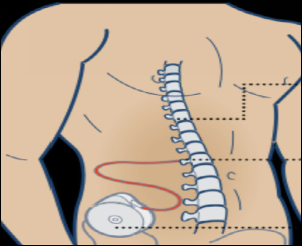
The ITB system consists of two main components: a programmable, implantable pump and a flexible intrathecal catheter. The pump — a flat, disc-shaped device approximately the size of a hockey puck — is implanted subcutaneously in the abdominal wall and contains a reservoir that holds the baclofen solution. The catheter is threaded from the pump, under the skin, and into the intrathecal space via a needle entry in the lumbar spine, with its tip advanced to the spinal level that best covers the patient's affected muscle groups.
The pump is programmed wirelessly by a clinician using an external device that communicates with the pump via radiofrequency. Delivery can be programmed as continuous infusion, complex variable-rate patterns (to provide different drug doses at different times of day, accommodating the natural variation in spasticity severity between day and night), or bolus doses triggered by the patient using a handheld communicator. The reservoir requires refilling with baclofen solution every one to six months, depending on the programmed dose, via a transcutaneous injection into the pump's refill port by a trained clinician.
ITB therapy is appropriate for patients with severe spasticity that is significantly impairing function, comfort, or care, and that has not responded adequately to conservative oral pharmacotherapy or physical therapy. The most common underlying conditions include:
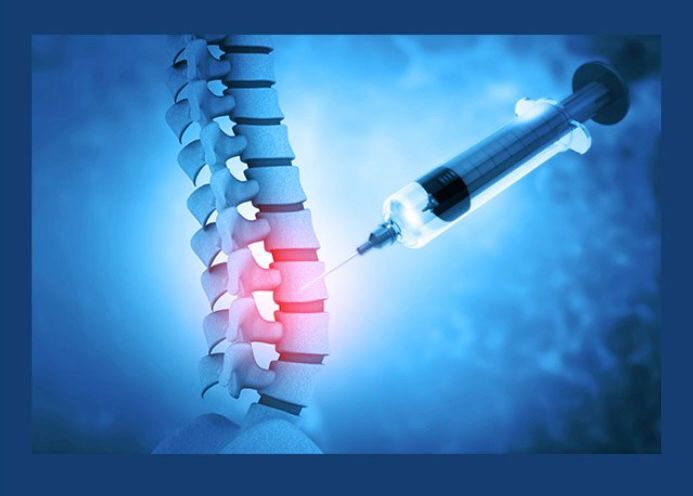
Before proceeding to permanent ITB pump implantation, a lumbar injection trial is performed to confirm that the patient responds to intrathecal baclofen and to identify the effective dose range. Under fluoroscopic guidance, a single bolus dose of intrathecal baclofen (typically 50–100 micrograms) is injected into the lumbar intrathecal space. The patient is then monitored for four to eight hours, with validated spasticity assessment scales applied at regular intervals to objectively document the response.
A positive trial is defined as a meaningful reduction in spasticity scores, typically a reduction of at least one point on the Modified Ashworth Scale across the affected muscle groups. Most patients who respond to the trial go on to achieve excellent long-term outcomes with the implanted pump. The trial also allows the clinical team to assess whether the patient's respiratory and cardiovascular function are safe for the higher ongoing doses that the pump will deliver.
Intrathecal baclofen therapy transforms the lives of patients with severe spasticity — reducing painful spasms, improving sleep, facilitating rehabilitation, and allowing caregivers to provide hygiene and positioning care that would otherwise be impossible.
The evidence base for ITB therapy is robust, supported by more than three decades of clinical experience and numerous controlled studies:
ITB therapy requires regular follow-up for pump programming optimization and reservoir refilling. The pump battery has a lifespan of approximately five to seven years and requires a surgical replacement procedure when depleted. With proper patient selection, appropriate programming, and consistent follow-up, ITB therapy has an excellent long-term safety profile. Our team at NuRaX provides comprehensive ongoing management, ensuring that every patient's therapy is optimized throughout the lifetime of their device.
If you are managing severe spasticity that has not been adequately controlled with oral medications, we invite you to contact NuRaX Care and Research Center for a comprehensive evaluation to determine whether intrathecal baclofen therapy is an appropriate option for restoring your comfort and quality of life.
Continue exploring our latest insights on neuromodulation therapies.
The LamiStem Technique combines lamina-based surgical access with targeted neural stimulation to unlock dormant motor pathways in patients with chronic spinal cord injury.
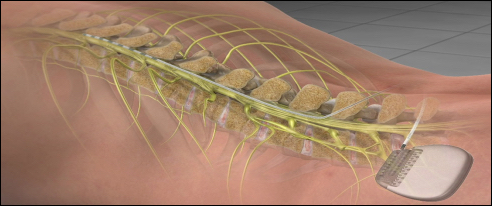
SCS delivers targeted electrical impulses to the dorsal columns, providing sustained relief for failed back surgery syndrome, CRPS, and diabetic neuropathy.
Schedule a consultation with our specialists and discover how neuromodulation therapies can transform your life.
Book Your Consultation